
Lugano
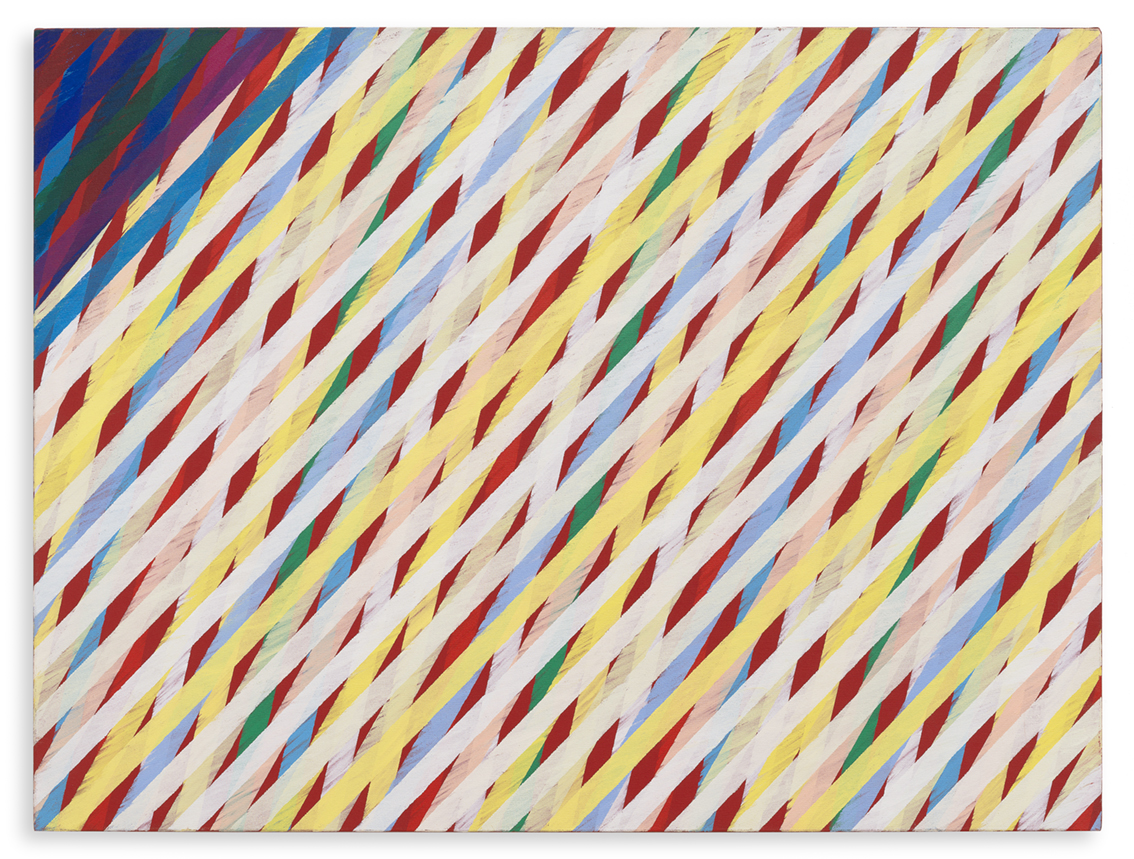
Wampum
2000
Olio su tela
90.5 x 120cm
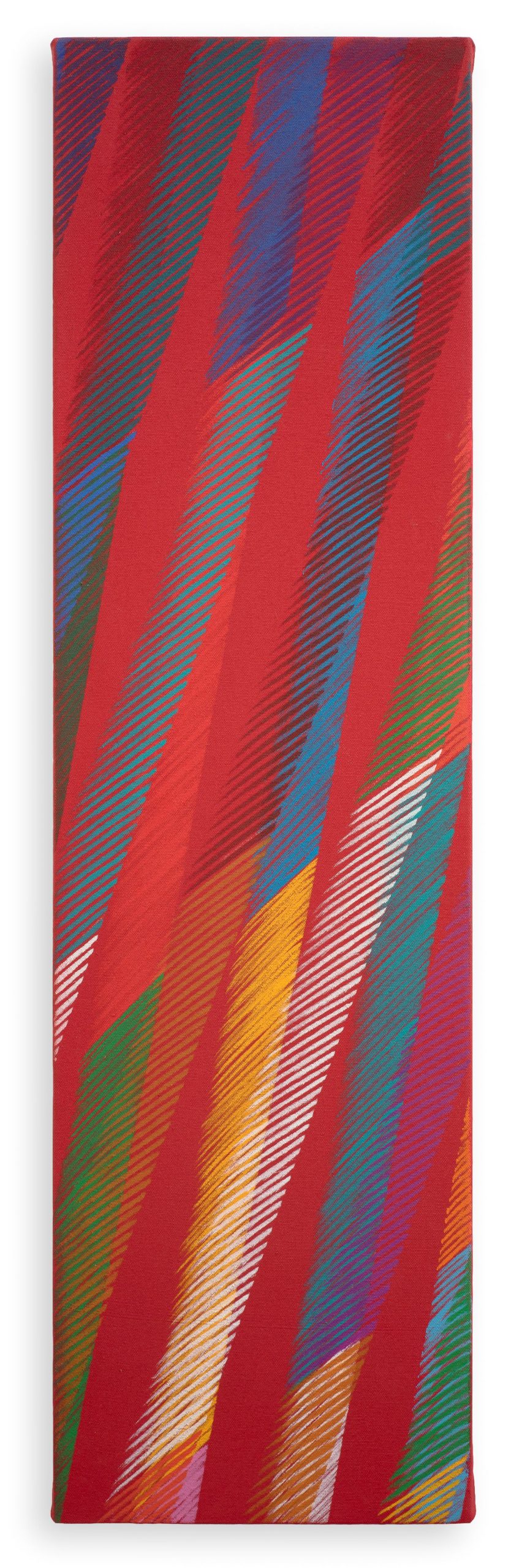
Long life
1989
Olio su tela
90 x 25,4 cm
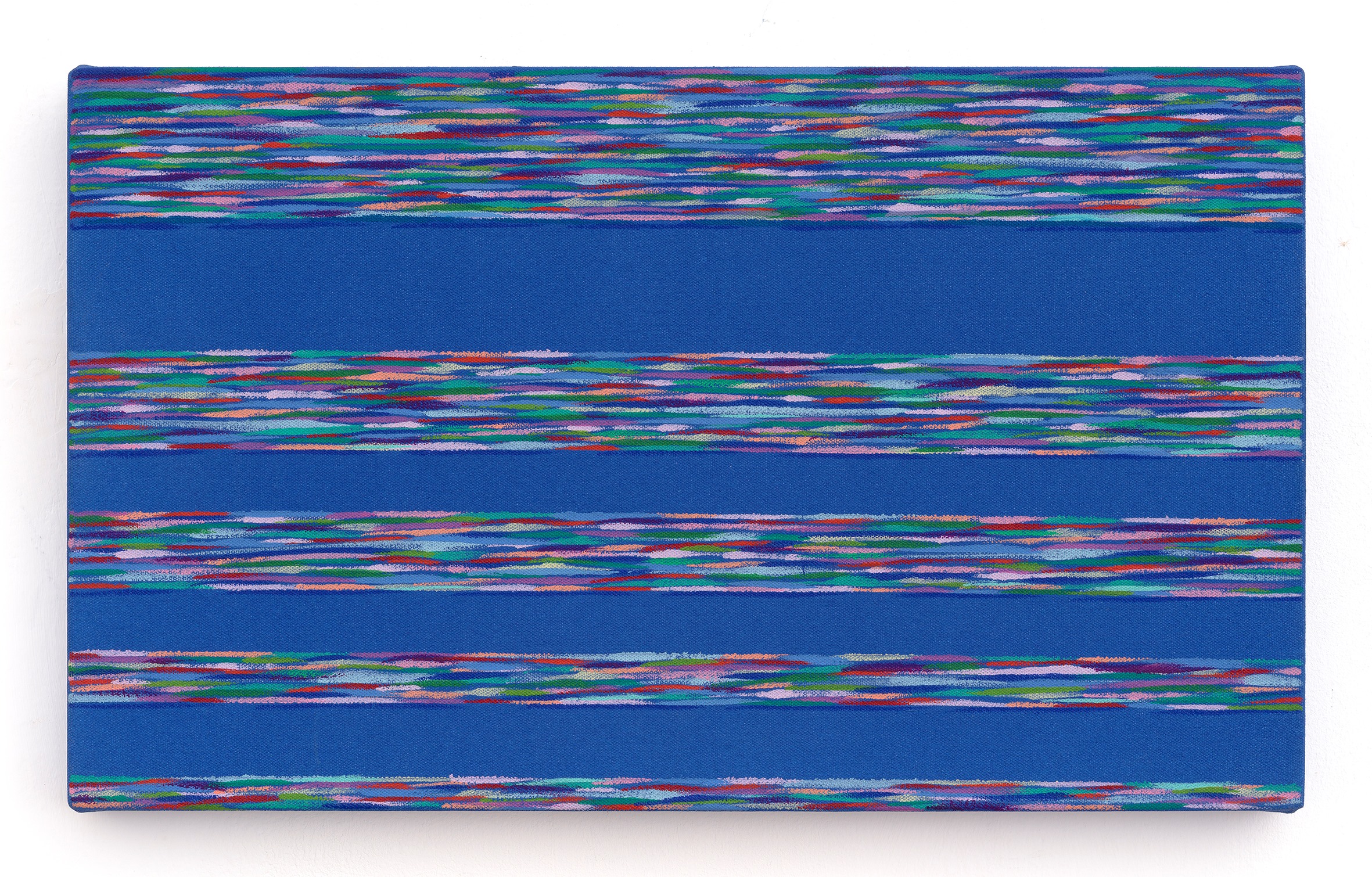
Cycladic V
1980
Olio su tela
30 x 50 cm
Piero Dorazio was born in Rome on June 29, 1927. After a classical education he enrolled in architecture and, in the years immediately after the war, turned to abstract art. In 1946 he founded the Gruppo Arte Sociale with Achille Perilli, Mino Guerrini, Renzo Vespignani, Paolo Buratti and Muccini. The following year, in March 1947, he was among the signatories of the manifesto of Forma 1, the group that brought together young Roman artists determined to reconcile Marxist commitment with an abstract, formalist language, alongside Pietro Consagra, Giulio Turcato, Perilli, Guerrini, Carla Accardi and Antonio Sanfilippo.
In 1950, again with Perilli and Guerrini, he opened the bookshop-gallery L’Age d’Or in Rome, one of the first spaces in Italy devoted to promoting abstract art: it was here that Carla Accardi held her first solo exhibition.
From the late 1940s Dorazio lived and worked between Paris, Prague, Berlin and the United States, where in 1953 he attended Harvard University’s International Summer Seminar and came into contact with American Abstract Expressionism. In these years his painting found the language that would make it recognisable: dense webs of coloured lines that interweave and overlap like a fabric, creating surfaces vibrating with light. He took part in the Venice Biennale in 1956 and 1958 and was given a solo room there in 1960; he also exhibited at documenta in Kassel (1959 and 1964). From 1960 to 1970 he chaired the Fine Arts department at the University of Pennsylvania in Philadelphia, and held solo exhibitions in galleries in London, New York, Switzerland and Germany.
In 1974 he settled in Todi, in Umbria, where he set up his studio in a former monastery and taught at the Scuola Atelier per la Ceramica Moderna. His colour grew ever more luminous: diagonal bands and grids of pure hues, as in the series inspired by the Greek islands, where he spent long periods. In the early 1980s the Musée d’Art Moderne de la Ville de Paris organised a major touring exhibition that travelled to several American museums and closed at the Galleria Nazionale d’Arte Moderna in Rome. He returned to the Venice Biennale with solo presentations in 1966 and 1988, and exhibited in Tokyo and Osaka (1985–1986) and in major European cities.
Piero Dorazio died in Perugia in 2005. His works are held by institutions including the Museum of Modern Art in New York, Tate in London, the Centre Pompidou in Paris and the Galleria Nazionale d’Arte Moderna e Contemporanea in Rome.
The works by Piero Dorazio available at the gallery span fifty years of his practice: from the works on paper of the 1950s and 1960s, an Untitled ink drawing from 1956 and a tempera from 1965, in which lines gather into ever denser grids, to the oil paintings of his maturity, such as Cycladic V (1980), Long life (1989) and Wampum (2000), with its diagonal bands of red, yellow, blue and pink. For information on available original works by Piero Dorazio, contact the gallery.